
ERP Implementation
Bring finance, sales, inventory and operations into one system, implemented in structured phases around the way your business runs.
Softsync ERP helps businesses in Bangladesh and internationally streamline operations, implement powerful ERP solutions, put AI and automation to work, and build scalable systems that support sustainable growth.
Explore Our ServicesPractical help at every stage of your business software.
View all services Sales and CRM
 Accounting and finance
 Inventory and warehouses
 Purchasing
 Manufacturing
 Human resources
 Project management
 E-commerce
 Reporting
Examples of what integrated business software can cover. The right scope for your business is agreed during consultation.
Manufacturers, distributors, retailers and service firms in Bangladesh and abroad. From factories and pharmacies to cafes and property developers, they rely on systems we have built, connected and kept running.






From Odoo itself to dashboards, location data, advisory and training, our partners extend what we can deliver for your business.
 Core ERP platform
 Dashboards and BI
 Location data
 Technology partner
 Technology partner
 Business advisory
 Skills and training

Softsync ERP is a software solutions company based in Dhaka, Bangladesh, delivering ERP, AI and custom software from first consultation to long-term support. We help organizations in Bangladesh and internationally digitize operations, implement ERP systems, automate workflows and improve the efficiency of their day-to-day work.
From first analysis through to long-term support, each service can stand alone or form part of a complete implementation.
View all services
Bring finance, sales, inventory and operations into one system, implemented in structured phases around the way your business runs.

We configure Odoo around how your business actually works, and extend it with maintainable custom modules only where standard features fall short.

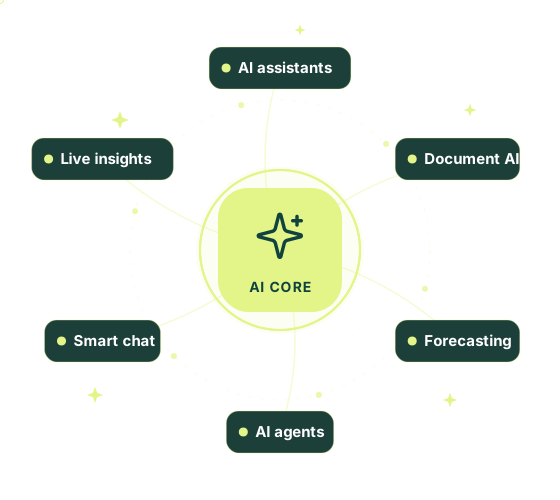
Put AI to work inside your ERP: assistants, document reading, forecasting and AI agents that take on routine work while your people stay in charge.

Map how work really moves through your business, find the friction, and define requirements before any software decision is made.

Replace repetitive manual steps with automated approvals, notifications and document flows that people can rely on.

Move from legacy systems or older versions to a current platform with a tested plan for your data, customisations and cutover.

We combine Odoo 19 with practical AI and automation, so routine work gets done faster and decisions rest on better information. AI does the legwork, and your people stay in charge.

Ask questions, draft replies and summarize records without leaving the system.

Read bills, invoices and receipts automatically, then queue them for review.

Anticipate demand, cash flow and stock needs from your own operational data.
Route requests, update records and follow up, with people approving the exceptions.

Answer common customer questions at any hour, and hand over to your team when needed.

Our engineers use AI tools to build, test and document custom work faster.
We build on Odoo 19 and proven open technologies, and add AI and automation wherever they save real time.
 LangChain
 Hugging Face
 TensorFlow
 PyTorch
 scikit-learn
 Ollama
 pandas
 NumPy
 Jupyter
 n8n
 Zapier
 Make
 Odoo
 Python
 PostgreSQL
 FastAPI
 Django
 Flask
 Node.js
 Redis
 Celery
 RabbitMQ
 GraphQL
 Postman
 JavaScript
 TypeScript
 HTML5
 CSS3
 Sass
 Bootstrap
 Tailwind CSS
 React
 Vue.js
 Next.js
 jQuery
 Flutter
 Docker
 Kubernetes
 Ubuntu
 Linux
 NGINX
 AWS
 Google Cloud
 DigitalOcean
 Cloudflare
 Git
 GitHub
 GitHub Actions
Integrated business applications can bring together the functions that are often managed separately.
Sales, stock, purchasing and finance working from the same information instead of separate tools.
Reports drawn from live operational data, so decisions rest on what is happening now.
Fewer hand-offs and less re-keying, with clear ownership of each step in a process.
Systems designed to be maintained and extended as your teams and locations grow.
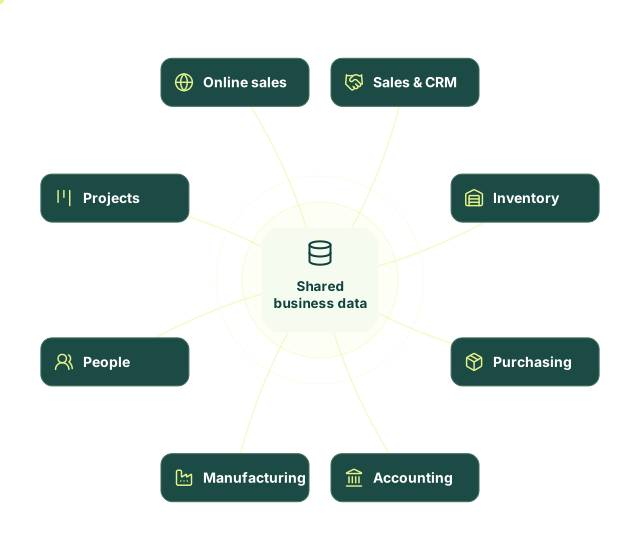

Technology decisions should follow from how your business needs to operate. That principle shapes the way we work.
We begin with your goals and processes, then decide what the software should do.
Standard features where they fit, and targeted customization where they do not.
We put AI and automation to work on stable, repetitive tasks, and keep people in charge of the decisions.
Clean implementations that stay easier to upgrade, extend and support.
Phased rollout and role-based training that prepare your team for the change.
A clear route to help after go-live, and continued improvement over time.
Every project is different, but a clear sequence keeps scope, risk and expectations under control.
Understand your goals, constraints and what has prompted the change.
Map how work moves through your business today and where it gets stuck.
Decide how the software should support each process, and agree the scope.
Set up the system, and build only what standard features cannot cover.
Clean and move your data, and connect the systems you rely on.
Check real scenarios with your team before anything goes live.
Prepare each role, then move to the new system with a clear cutover plan.
Resolve issues and keep improving as your business changes.
Items marked as demonstration examples are illustrative scenarios, not descriptions of client engagements.
 Demonstration example
An illustration of how a mid-sized manufacturer could replace spreadsheet planning with an integrated production system.
 Demonstration example
An illustration of how a distributor could unify stock, order processing and invoicing across several locations.
 Demonstration example
An illustration of how a professional services firm could connect project delivery with time capture and invoicing.

It depends on the number of processes and locations involved, and on the condition of your data. We agree a realistic timeline after analysing how your business works, rather than quoting one before we understand it.
No. Rolling out in phases reduces risk and gives teams time to absorb the change, so many projects begin with the area where the problem is greatest.
Standard features are used wherever they fit, because they stay easier to upgrade. Custom work is reserved for what standard features cannot cover, and is documented for whoever maintains it next.
Data is cleaned and moved as part of the project, and the systems you rely on can be connected. What is worth migrating is decided together, and tested with your team before go-live.
Yes. We are based in Dhaka and work with businesses both in Bangladesh and internationally.
You have a clear route to help when issues arise, and the system can keep improving as your business changes.
Let's discuss your business processes and identify the right software solutions for your next stage of growth.


